Monday, March 8, 2010

Artificial Selection in Plants and Animals

Artificial selection is a type of selection in which the individuals of a species are chosen to ensure the presence or absence of certain traits. This selection is usually repeated in successive generations until those attributes approach in the descendents of offspring. Artifical selection is known as selective breeding or unnatural selection. It is a great principle to farmers and breeders because they can use it to change the traits of their plants and animals. This can satisfy their needs and makes their lives easier. Artificial selection is commonly used to produce new breeds from the variable offspring of hybrid crosses. It can be accelerated by techniques such as plant tissue culture and the artificial insemination of livestock. Artificial selection can greatly affect the lives of farmers and breeders when they choose the desirable traits for their plants and/or animals such as disease resistance and high crop yield in plants, and high production and new desirable traits in animals.

When an organism undergoes an advantageous change that is passed to successive generations, it is known as natural selection. Artificial selection was utilized by Charles Darwin to be contrasted with natural selection in which differential reproduction of organisms with certain traits is attributed to improved survival or reproductive ability (“Darwinian fitness”).

Using artificial selection, farmers and breeders choose desirable traits for their plants mainly the ones that are disease-resistant and high crop yield. Plant breeders start off with variable hybrid plants and then apply selection to produce new crops, trees, and flowers with desirable traits. Plants without any desirable trait is less likely to survive as they do not have fertilizers and pesticides. In fact, they will eventually evolutes.

The domestication of plants began with wheat, peas, and olives and dramatically increased the amount of food produced, which helped support human production growth. The seeds from wild plants were actively collected, planted and cultivated. As food was harvested, seeds from best plants were selected for the planting of subsequent crops.

Farmers have cultivated numerous crops from the wild mustard by artificially selecting them for certain attributes.

Source: http://evolution.berkeley.edu/evolibrary/article/_0_0/evo_30

These vegetables were cultivated from wild mustard. This evolution came through artificial selection.

Source: http://www.gly.uga.edu/railsback/1122/Brassica2.jpeg

The dramatic results of artificial selection that can be seen in Brassica; six different vegetables – kale, Brussels sprouts, broccoli, kohlrabi, cabbage, and cauliflower. They all have the sea cabbage, Brassica oleracea as their single common ancestor.

Ontario has a large agricultural sector which produces a wide range of foods. Among Ontario’s most valuable food crops are vegetables such as tomatoes, carrots, onions, and potatoes; grains such as wheat, oats, and barley; corn (mostly for use as livestock feed); canola (for oil); soybeans; and fruits such as apples, pears, peaches, grapes, and strawberries.

Over many years of artificial selection, the frequency of desirable gene variants increases in the population.

Source: http://evolution.berkeley.edu/evolibrary/news/070201_corn

This process has produced all of the major crop plants from their wild ancestors. By figuring this out, scientists are discovering clues about how to improve crops to change human needs. Most importantly, they would like to find out which gene variants were favored by ancient people (which genes were the targets of selection).

Using artificial selection, these plants have improved by quality. The one of the left was before artificial selection was used and the one on the right was after artificial selection.


Wild sunflowers Domestic sunflowers 


Wild tomatoes Domestic tomatoes


Teosinte plants Corn plants

Source: http://evolution.berkeley.edu/evolibrary/news/070201_corn

With artificial selection in plants, plants can greatly improve by quality. Through artificial selection, the plants with the desired traits of each generation were selected to reproduce, creating the next generation. This was used by a technique (plant tissue culture) in which selected plants can be cloned and grown directly into new plants. These plants can cultivate vegetables, which are beneficial for farmers because they can sell it and make good money.

With artificial selection, animal characteristics can be changed by using a technique (artificial insemination of livestock). Farmers and breeders can change the characteristics of their animals by selecting for reproduction those individuals with the most desirable qualities such as speed in racehorses, milk production in cows, trail scenting in dogs.
 

Pigs are artificially selected to produce the largest amount of meat.

Source:http://library.thinkquest.org/C0118084/Gene/Genetic_variation/artificialselection.htm  

Source: http://www.windows.ucar.edu/tour/link=/cool_stuff/tour_evolution_7.html&br=gr

This picture shows how selecting for different traits of breeding has caused different dog breeds to have distinctive characteristics. (Dog breeds from left to right: top row- Alaskan Malamute, Basset Hound, Llasa Apsa; middle row- Beagle puppy, Shar Pei, Chow; bottom row- Pekinese, Tibetan Terrier, Pug.)

Breeding a male horse with excellent racing qualities with a healthy female horse so that the offspring will have the desired traits such as the racing qualities. Hens could be artificially selected to produce more eggs and cows can be artificially selected for a high milk production.

Advantages of Artificial Selection

  • It creates new desirable traits for plants and animals.
  • Animals can produce a lot of products (ex. pigs produce meat, hens produce eggs, and cows produce milk).
  • Farmers and breeders can attract a lot of consumers by selling their plants and the products produced by animals in their new desirable trait.
  • Artificial selection rules out weakness and disability.

    Disadvantages of Artificial Selection
  • If there is an environmental factor occurring on plants and animals that were domesticated through artificial selection, there will be a higher possibility of extinction.
  • With artificial selection, the society will be highly competitive.
  • This is very expensive so only wealthy farmers and breeders can afford it.
  • It is not according to God’s plan of creation.
  • It is inhumane so it can cause mutations or produce new problems.

In artificial selection, plants and animals can have their traits changed.to satisfy the needs of humans. Personally, I find artificial selection similar to genetic screening in designer babies that I did in my Unit 5 blog based on its facts, advantages, and disadvantages. The advantages of artificial selection include creating new desirable traits for plants and animals, animals producing a lot of products, farmers and breeders making good money, and also it gets rid of weakness and disability. Artificial selection gives farmers and breeders an opportunity to change the traits of their plants and animals. Based on my images that I showed about artificial selection in plants, they improved by quality and charcateristics such as disease-resistant and high crop yield. Animals can produce a lot of products. Pigs and produce the largest amount of meat and hens can produce a lot of eggs. There can be high milk production in cows and high speed in racehorses. On the other hand, there are disadvantages for artificial selection. From what I have learned from Unit 2 SBI 3U1, biodiversity is important to ensure survival. So if we completely create plants and animals with desirable traits and an environmental factors occurs, there will be a higher possibility of extinction but if there are different plants and animals with different traits, it will not affect the entire population so the resistant ones will reproduce and pass the genes and create a greater biodiversity. Artificial selection is very expensive so only wealthy farmers and breeders can afford it. It is not according to God’s plan of creation. It is God who created plants and animals and have given them traits so farmers and breeders cannot make any preferences. As I find that there are more disadvantages than advantages for artificial selection and there are severe consequences, artificial selection should not be used in plants and animals.

Resources

Sunday, January 3, 2010

Is Perfection A Reality?

Question: "Designer babies" is the term being used by the media to describe the future of modifying or selecting our children's genes for desirable characteristics (medical and cosmetic). Are things getting out of hand with our research into genetic processes? In the blog investigate social and ethical implications of this research and technologies that have been developed from it.

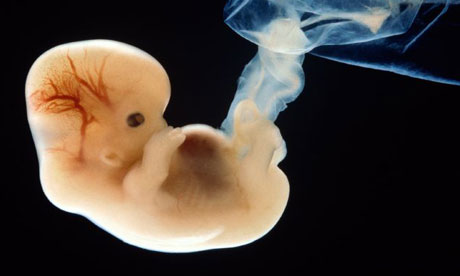
Designer babies are babies whose genetic makeup has been artifically selected by genetic engineering using InVitro Fertilization (IVF) to ensure the presence or absence of particular genes or characteristics. It is the usage of genetic screening that creates babies to meet certain criteria. It is very beneficial for parents to have "the perfect baby." They get an opportunity to choose certain traits and/or sex of the unborn baby. Genetic screening can be used to alter anything from gender to certain factors such as disease, appearance, personality, and IQ (measure of intelligence). It has given us the ability to eliminate genes that are associated with disease, genetic defects, and terminal illness. Even though parents can design the type of baby that they want using genetic screening, designer babies can affect the society in a negative way as well. In this blog, I am going to talk about the positive and negative consequences of designer babies.

Source: http://www.australasianbioethics.org/Images/cloning-8.JPG

Here is a news article on Designer Babies: Creating the perfect child:

http://www.cnn.com/20080TECH/science/10/30/designer.babies/index.html

There is also a video on designer babies:

http://www.youtube.com/watch?v=TN9ep4B9Hw0

Advanced Reproductive Technologies

The two technologies that have been developed on designer babies are: InVitro Fertilization (IVF) and Pre-implanation Genetics Diagnosis (PGD).

The InVitro Fertilization (IVF) is used to fertilize eggs with sperms in test-tubes outside the mother's body in a laboratory. This allows parents and doctors to reduce the chance that a child will be born with a genetic disorder. Thus, the resulting embryo goes back into the mother's uterus.

Source: http://www.defeatinfertility.com/wp-content/themes/NicheProfitPressV2/images/ivf-diagram.gif

This diagram shows the process of InVitro Fertilization (IVF).

IVF can be used to choose the sex of the embryo. Doctors do this by sorting out a sample of the father's sperm and only fertilize the egg with either 'male' sperm or 'female' sperm or by using Pre-implanation Genetics Diagnosis (PGD).

The Pre-implanation Genetics Diagnosis (PGD) is used to screen embryos conceived through IVF and choose which ones will or will not be implanted.

Source: http://www.arhp.org/uploadImages/cloning_7.jpg

This diagram shows the process of Pre-implanation Genetic Diagnosis.

Advantages of Designer Babies

  • It reduces the baby's chances of being born with genes of certain hereditary disorders or birth defects.
  • It gives parents an opportunity to choose certain traits and sex of their unborn baby.
  • It is possible to create the perfect baby because scientists can give its specific characteristics such as physical ability, intelligence, and appearance if its genes are altered.

Source: http://static.guim.co.uk/sys-images/Guardian/Science/pix/2007/08/01/embryoblue_2.jpg

Disadvantages of Designer Babies

  • It is not according to God's plan of creating human beings in his own image.
  • If there is an environmental factor occuring on designer babies, there will be a higher possibility of extinction.
  • With designer babies, the society will be highly competitive.
  • As many people will be going for high-paying jobs, there won't be enough people for low-paying jobs (construction workers, garbage collectors, janitors, etc.)
  • There can be an increase of unreasonable fear or hatred towards foreigners or anyone who appears different.
  • There is fear that parents and doctors will be able to choose certain genes and/or traits for babies using a genetic technology.
  • This is very expensive so only wealthy families can afford it.

Conclusion

Using InVitro Fertilization (IVF), babies' genetic makeup can be selected by genetic engineering to change its certain genes or characteristics. This gives parents an opportunity to create "the perfect baby".

Advanced reproductive technologies are used for three main reasons:

  • To help infertile couples have children.
  • To screen embryos for genetic disorders and select healthy ones.
  • To determine the sex of the baby. This is done to ensure that there is no genetic disorders. Males can have a genetic disorder such as Muscular Dystrophy so couples can choose to have a female child and thus have a healthy baby.

With genetic screening, genes relating to disease, genetic defects, and terminal illness can be eliminated. There are many people in the world who have genes of certain hereditary disorders (Huntington's chorea, Cystic Fibrosis, Muscular Dystrophy). The advantages of designer babies include reducing the chance of the baby having genes for certain hereditary disorders and creating the perfect baby based on its appearance, skills, and intelligence. Parents can also choose the sex of the unborn baby. On the other hand, one of its disadvantages are that it is not according to God's plan. In the bible, we are told "God formed man from the dust of the ground, and breathed into his nostrils the breath of life; and the man became a living being." (Genesis 2:7) It is God who gave us life and children are a gift from him so parents cannot make any perferences. From what I have learned from Unit 2 SBI 3U1, biodiversity is important to ensure survival. So if we completely create designer babies and an enivronmental factors occurs, there will be a higher possibility of extinction but if there are different people, it will not affect the entire population so the resistant ones will reproduce and pass the genes and create a greater biodiversity. With designer babies, the society will be highly competitive. Therefore, there wouldn't be enough people for low-paying jobs (construction workers, garbage collectors, janitors, etc.). Genetic engineering is a very expensive process so only wealthy families can afford it. There is also fear that parents and doctors will be able to choose certain genes and/or traits using a genetic technology. Therefore, I recommend that genetic engineering should not be used as creating "the perfect baby" based on all of these disadvantages.

Resources


Thursday, October 15, 2009

Deforestation and its Effects

Question: Many scientists consider humans as the most invasive species, as humans can greatly change an environment and impact living things that reside there. Are we being stewards of the world? Take a look at an issue in which human intervention has positively or negatively affected the biodiversity of our ecosystems.

Humans are considered as the most invasive species that can greatly change the environment and impact the living things that reside there. This is because of our increased consumption of natural resources that destroy every other living thing in that ecosystem. Our actions have a negative impact on the biodiversity of the environment. In this blog, I am going to talk about deforestation and how human intervention has affected its habitants and the entire ecosystem.

Deforestation is a permanent destruction of indigenous forests and woodlands. It is a very dangerous issue that has many effects on the ecosystem. It occurs when human beings cut down forests for their needs. Even though it is to satisfy their needs, it cannot be justified because it creates a major problem for the biodiversity of the environment. Biodiversity is essential to the strength of the entire ecosystem. We must save forests because they are essential in keeping and sustaining global ecosystems. Forests are a habitat for many living species. They give mankind a variety of gifts that contribute to our quality of life. They absorb carbon dioxide from the atmosphere and produce oxygen needed for living organisms.
Causes of Deforestation

The main causes of deforestation are:
  • Urban and construction purposes: We cut down trees to make lumber for building materials, furniture, and paper products. Forests are also cleared in order to accommodate expanding urban areas.
  • Growing Crops: Deforestation is used to clear the land so that crops can be grown.
  • Creating Grazing Land: Forests are cut down in order to create land for grazing cattle.
  • Fuel: Trees are used as firewood or turned into charcoal, which are used for cooking and heating purposes.
  • Paper: We cut down trees for paper. We use paper for study materials, reading, and writing.
Some of the other causes of deforestation include: clearing forests for oil and mining exploitation and making highways and roads.
Consequences of Deforestation
Deforestation has a negative impact on the environment. They affect:
  • The carbon cycle: During photosynthesis, trees absorb carbon dioxide from the atmosphere to form carbohydrates. When deforestation occurs, carbon dioxide is released that can cause an increase in atmospheric carbon dioxide concentration. Carbon dioxide is a major contributor to greenhouse emissions. Deforestation can also affect cellular respiration because all the other organisms won’t be able to get enough oxygen from trees.

Source: http://eo.ucar.edu/kids/green/images/carboncycle_sm.jpg

This is how the carbon cycle works and deforestation can have a negative effect on this cycle.

  • The water cycle: Trees draw ground water up through their roots and release it into the atmosphere (transpiration). In Amazonia over half of all water circulating through the region’s ecosystem remains within the plants. When there is deforestation, the region cannot hold enough water. This can lead to drought and heat waves. When deforestation affects the water cycle, it can lead to several problems:
  • Soil erosion: With the loss of a protective cover of vegetation, more soil is lost. Soil erosion can cause silting of water bodies such as lakes and dams.

    Source: http://earthobservatory.nasa.gov/Features/Deforestation

This picture shows an eroded hillside along a river in Amazonia that shows an infertile soil typical of tropical environments (pinkish-tan) topped by a very thin layer of fertile soil and forest detritus (brown).

  • Extinction of species: Most of the organisms depend on the forest for survival. Forests contains more than half of all species on our planet. As the habitat of these species is destroyed, the number of species decline.

Source: http://earthobservatory.nasa.gov/Features/Deforestation/

Here is an image of a number of species that have been endemic, which is represented by a dark-blue colour.

Deforestation can lead to other issues:

  • Global warming
  • Biosphere instability
  • Desertification
  • Climate change

Source: http://www.umich.edu/~gs265/society/deforestation.htm

The effects of deforestation are widely ranging and can be irreversible if not stopped.

Statistics of Deforestation

  • 81% of its original forest cover is permanently lost in Niagara.
  • The tropical rainforests of Brazil are less by 90-95%.
  • The forests of Central America are down by two-thirds lowlands.
  • India, Mexico, Philippines, Thailand, Indonesia, Bangladesh, Myanmar, China, Sri Lanka, the Congo and Ghana have lost more than 50% of their rainforest cover.
  • Harvesting of forest cover has left Afghanistan with approximately 25% of forests.

Solutions of Deforestation

We can stop deforestation by:

  • Recycling
  • Reforestation
  • Cutting down less trees
  • Reducing the use of fossil fuels
  • More awareness

Deforestation is one of the greatest tragedies and threats that can negatively affect the biodiversity of our ecosystems. People use forests for their needs such as paper, fuel, urban and construction purposes, growing crops, grazing cattle, oil and mining exploitation and making highways and roads. Deforestation can cause many severe consequences. Its most severe impact is the loss of habitats and extinction of living species. Deforestation can also affect the carbon and water cycle.

We wouldn‘t have to deal with the problem of deforestation if we thought of the consequences beforehand. We should try to lessen our dependency on forests for our needs. Based on my solutions on how to stop deforestation, the best option will be reforestation because there will be a balance of ecosystem and the rate of deforestation will diminish. Trees and plants are one of the best gifts that God has given to mankind. God wants us to be the stewards of this earth. He has given us dominance over all species so we should take care of our earth for our future generations. We should be environmentally conscious and use eco-friendly products for our daily needs. If we give more time and effort for the world’s conservation, the possibilities of reaching that goal will be high.

Here is a video on stopping deforestation:

http://www.youtube.com/watch?v=NyPfUe5khh4#watch-main-area

Resources